



Designed for Precision Leatherwork
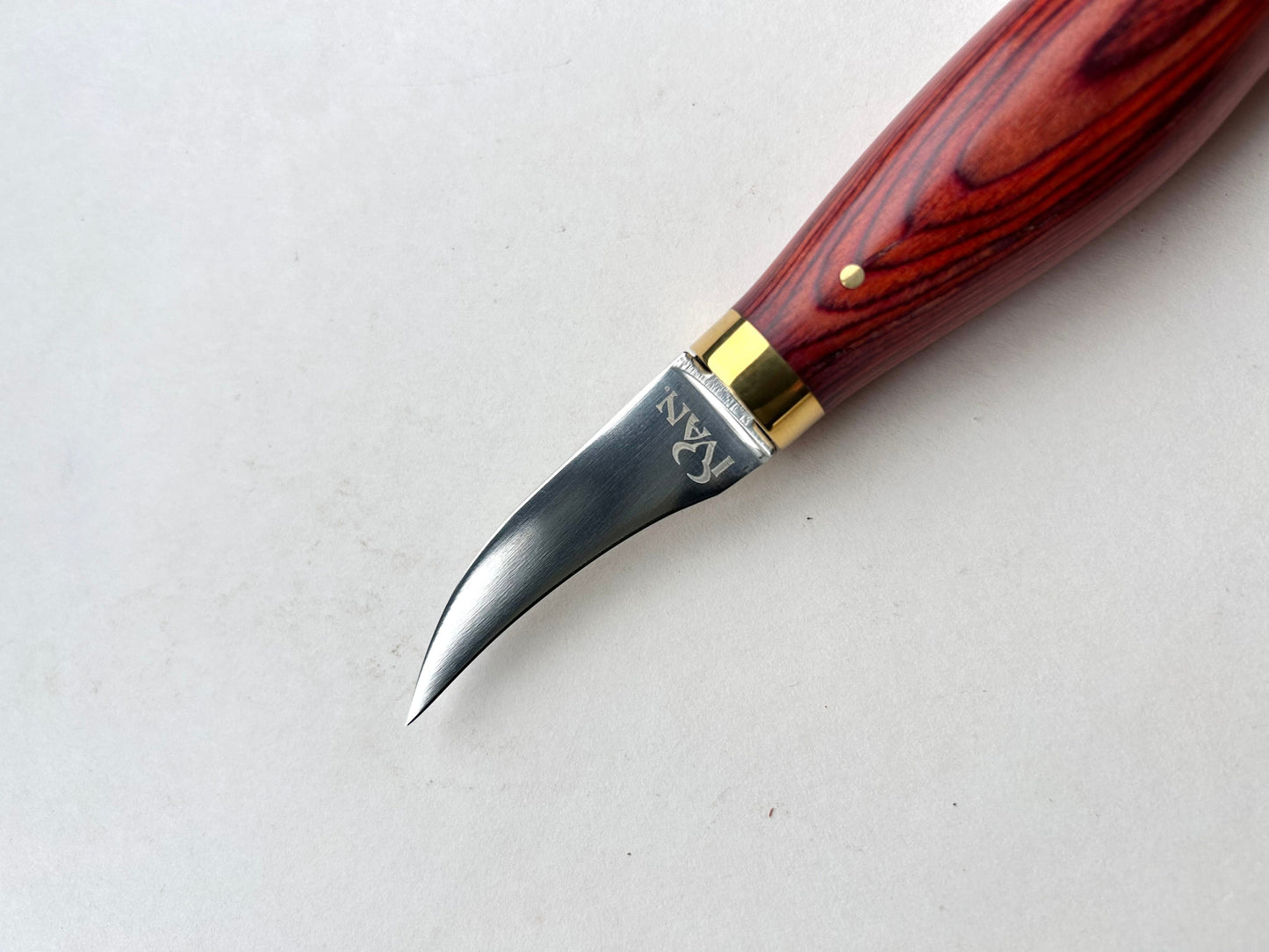
Unlike standard utility knives, the Curved Blade Trim Knife is specifically designed for leathercraft applications. The carefully shaped cutting edge allows the blade to glide naturally through leather, providing greater accuracy when following curves, trimming seams or cleaning up finished edges.
The ergonomic handle offers a secure and comfortable grip, giving you confidence and control when working on detailed projects. Whether you’re creating belts, wallets, bags, watch straps or bespoke leather goods, this knife helps achieve the clean, professional finish that quality leatherwork demands.
Curved Blade (Clicker) vs Straight Blade Trim Knives for Leathercraft
| Feature | Curved Blade (Clicker Style) Knife | Straight Blade Trim Knife |
|---|---|---|
| Best For | Curved cuts, intricate shapes, pattern cutting | Straight cuts, edge trimming, general workshop use |
| Cutting Style | Rolling, sweeping cut action | Direct push or pull cutting |
| Precision | Excellent on curves and detailed work | Excellent on straight lines and accurate trimming |
| Control | High control when following patterns and contours | High control for linear cuts and edge work |
| Learning Curve | Moderate | Easy |
| Long Straight Cuts | Good | Excellent |
| Curved Cuts | Excellent | Good |
| Pattern Cutting | Excellent | Very Good |
| Edge Trimming | Very Good | Excellent |
| Leather Thickness | Suitable for light to heavy leather depending on blade geometry | Suitable for most leather weights |
| Visibility of Cut Line | Excellent due to curved blade profile | Very Good |
| Speed of Use | Fast once mastered | Fast and intuitive |
| Beginner Friendly | Good | Excellent |
| Versatility | Specialised for detailed cutting | Highly versatile all-round knife |
| Sharpening | Slightly more complex due to blade curve | Generally easier to sharpen |
| Professional Use | Widely used by experienced leatherworkers | Widely used by both professionals and beginners |

Which Knife Should I Choose?
Choose a Straight Blade Trim Knife if you:
- Are new to leathercraft
- Need a versatile all-purpose knife
- Frequently cut straps, belts and straight edges
- Want the simplest knife to sharpen and maintain
Choose a Curved Blade (Clicker Style) Knife if you:
- Make wallets, handbags and detailed leather goods
- Frequently cut curved patterns
- Want maximum control during intricate cutting
- Already have a general-purpose leathercraft knife in your toolkit
Professional Recommendation
Many experienced leatherworkers keep both styles on the bench. A straight blade trim knife handles general cutting and edge work, while a curved blade clicker knife is used for precision pattern cutting and detailed shaping. Together they provide the versatility needed for almost any leatherworking project.
Who We Are

Founded in Devon by leatherworker and CARV founder Becky and her partner Tommy, British Leather Supplies was created to make finding trusted leathercraft tools and hardware simpler, more affordable, and less overwhelming. Built on real workshop experience, this family-run business supports everyone from beginners to professional leatherworkers with carefully selected products and genuinely friendly customer service.
Fair and affordable pricing
Quality and Reliable
Fast Shipping
Friendly Support
Workshop Tested
Leathercraft Guides & Information
View all-

What Is Patina in Leather?
A beautiful patina is one of the reasons leather is such a rewarding material to work with. In this guide, we’ll answer the most common questions about leather patina, including...
What Is Patina in Leather?
A beautiful patina is one of the reasons leather is such a rewarding material to work with. In this guide, we’ll answer the most common questions about leather patina, including...
-

How to Care for Vegetable Tanned Leather: The C...
Vegetable tanned leather is one of the most beautiful and durable materials available for leathercraft. In this guide, we’ll explain how to care for vegetable tanned leather, how often it...
How to Care for Vegetable Tanned Leather: The C...
Vegetable tanned leather is one of the most beautiful and durable materials available for leathercraft. In this guide, we’ll explain how to care for vegetable tanned leather, how often it...
-

How to Care for Horween Leather: A Complete Guide
Horween leather is renowned for its exceptional quality, rich character and ability to develop a beautiful patina over time. This guide explains how to care for Horween leather, how often it...
How to Care for Horween Leather: A Complete Guide
Horween leather is renowned for its exceptional quality, rich character and ability to develop a beautiful patina over time. This guide explains how to care for Horween leather, how often it...


